It's not fancy, it's not big and it's not clever, but the scrag end is delicious. For simple, honest opinions on restaurants, recipes, supper clubs and what not, you've come to the right place.

Showing posts with label Heston Blumenthal. Show all posts

Monday, 7 March 2011

Dinner by Heston Blumenthal, The Mandarin Oriental Hotel, Knightsbridge

Cooking and writing are similar in lots of ways. Good writing, like good cooking, requires a deep understanding of its various component parts – not only the selection of words or ingredients, but their interplay, their correspondences, their echoes and their history. Coleridge said that a good writer (Samuel Johnson, in his example) produces prose in which ‘you cannot alter one conjunction without spoiling the sense.’ Spoiling is culinarily apt, as is what follows: ‘It is a linked strain throughout.’ If good writing means that every word, every clause and every sentence counts, then good cooking might require similar strains of thought and conjunctions between ideas. 

Heston Blumenthal is a master of making things count. There is never anything extraneous in his dishes. And if that sounds odd in reference to a man who’s developed television programmes almost wholly about ornament in cooking, then, well, you shouldn’t believe everything you see on TV. 


Consider ‘Meat Fruit (c.1500)’, our opening course at Dinner by Heston Blumenthal. A much-admired chicken liver parfait encased in a mandarin jelly, it could serve as an emblem of all that’s great about Blumenthal’s cooking (though, let’s not forget, Ashley Palmer-Watts is the head chef here, even if it’s not his name on the menu). It’s a gimmick, certainly. But then you need the sharp jelly to cut through the luxurious paté. And there’s more to it than that. This is a funny dish (funny ha ha, but also strange), that confounds your sensory expectations in the disjunction between its appearance, texture and taste. You know, as you cut into the orange globe, that it’s not a real mandarin, and yet you still expect the skin to be tough. It’s like getting on a stationary escalator and adjusting your step anyway, if a lot nicer. 


But there’s more to it than that too. Meat Fruit drags back through culinary history to medieval banqueting tables, but also alludes to other kinds of culinary illusion. Blumenthal’s admiration for Lewis Carroll is well known, and this dish could have come from Wonderland, with its tricksy pills and mock turtles. Its slightly risqué title adds crude humour, while the 'mandarin' pokes gentle fun at the restaurant's host.

Roast Marrowbone (c.1720) provides fewer laughs, though that circa seems amusingly optimistic. Even so, it is similarly confounding, with rich marrow sat louchely among assertive anchovy, mace and parsley. You expect it to be heavy, but it’s light; you expect it to be meaty, which it is, but it’s also refreshing. There’s even a hint of the Danish school – it looks and tastes like something you could have at North Road or, dare I say it, Noma (I’ve never been). 


Many reviewers have done down the main courses at Dinner, at least by comparison with those remarkable starters. That’s unfair. Roast Turbot (c.1830) picks up where the marrow left off, but like any good story, expands and develops the promise of its introduction. This was one of the best things I’ve ever eaten, anywhere. Its ‘cockle ketchup’ is another nice joke, but again, delivers in flavour to the extent that the dish is inconceivable without it. Bitter, sweet and sour, with a very slightly gelatinous texture, it tastes of the sea and the kitchen – a marriage of craft and raw materials that would have impressed those emerging industrialists around at its birth.


Spiced Pigeon with Ale and Artichoke (c.1780) is positively conventional by comparison, proving that excellent artists can always do the simple as well as the complex. The pigeon is perfectly cooked, while the ale seems to hark back to 18th century taverns or rather grander hunting lodges. Of course, it’s also there because it tastes good and because ale is becoming more trendy by the day. It might be slightly weaker than the other dishes, though that reflects more on them than on it. 


An English cheese board to share does exactly what it should, though it must be said that it’s rather foisted upon us by an up-selling waiter. It’s an unfortunate trait of the restaurant, this tendency to make you feel like a lesser diner if you don’t have champagne before you start, or you don’t want cheese, or you ask for tap water (we had the champagne, the cheese and the tap water, but we probably would have done even without the pushiness). Indeed, were the food less brilliant, this would be a serious problem. 
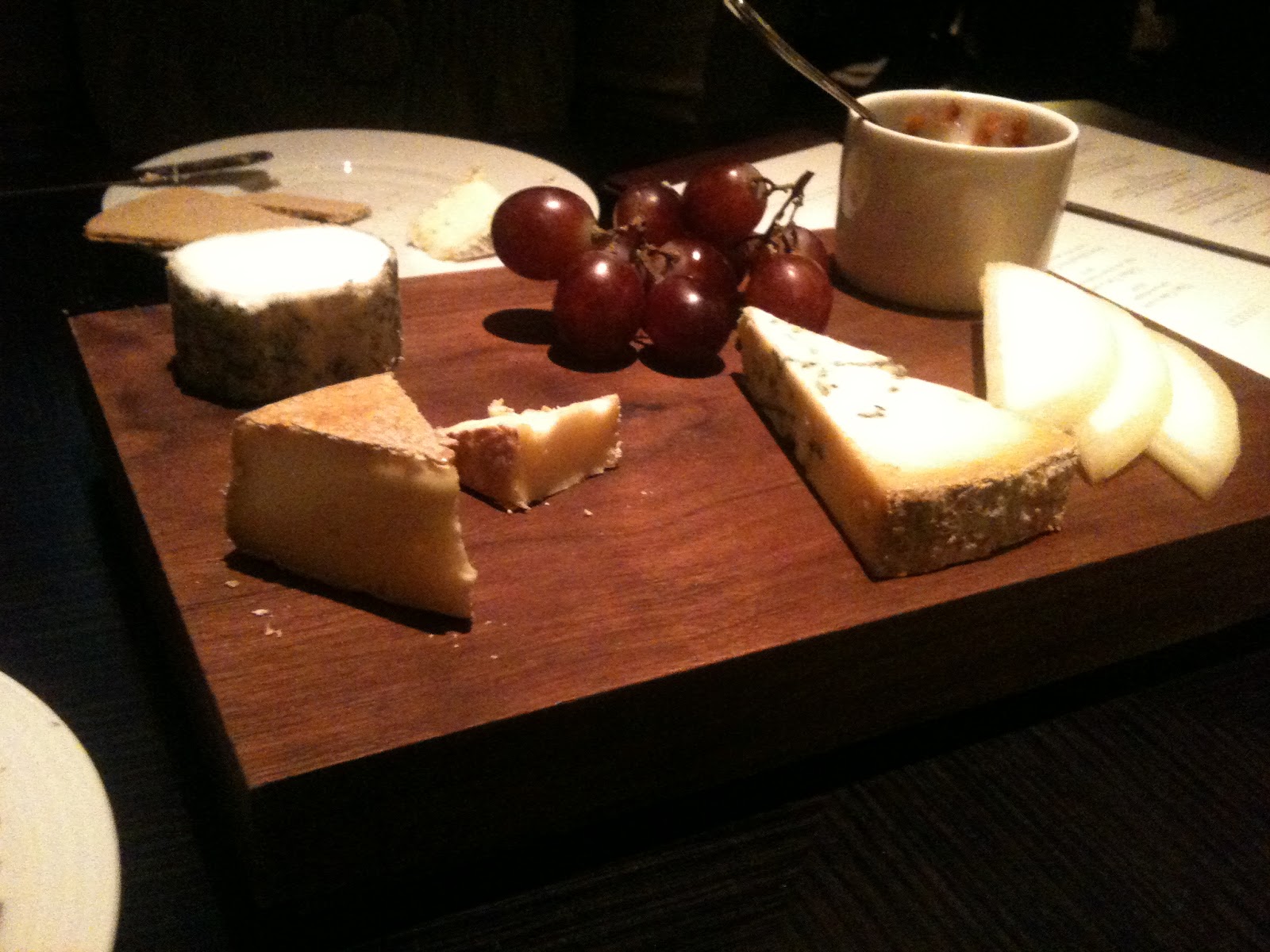

Desserts mark a return to the humour of the starters. Brown Bread Ice Cream (c.1830) is yeasty and unsettling, but it’s utterly delicious. Taffety Tart (c.1660) contains a chewy, rosy jelly bracketed by crispy, fennely caramel and enhanced by cream and a truly superb blackcurrant sorbet. Variants of texture, taste, temperature and even tone need to be in concert for this to work. It coheres perfectly. 


Finally, an earl grey and white chocolate ganache comes with a stick of shortbread. This, like the Meat Fruit, asks you to suspend your disbelief. You know roughly what’s in it, and you know what you think it’s going to taste like. And then it does, but more so, with more tea and more chocolate than seems possible – it’s a high wire act, a magic trick. 


Of course, all this costs a lot – about £100 per head including a bottle of Fleurie. But if you’re going to spend £100 pounds on anything, make it Dinner. Coleridge said that prose is ‘words in their best order,’ while poetry is ‘the best words in their best order.’ Heston Blumenthal is a poet of the table.

Phil Lett’s take: 8/10

Dinner by Heston Blumenthal on Urbanspoon

Tuesday, 4 January 2011

The Hinds Head, High Street, Bray

Every truly brilliant chef faces a choice sooner or later: refine, improve and experiment by focussing on what already exists; or expand, whether in the form of more restaurants, more TV appearances, more endorsements or more cookbooks. Most try to tread a middle path, wary of Gordon Ramsay-like dilution of standards and public profile on the one hand, and becoming the answer to a quiz question that nobody’s ever asked on the other. 

Heston Blumenthal ran The Fat Duck in Bray for several years before he had any significant personal profile. During that time, those lucky enough to attend the restaurant spoke in tones of bemused awe when asked to describe it, as perplexed by the dishes as they were delighted. The Fat Duck is still an unutterably glorious restaurant, with a menu that perfectly combines high magic and low wit. But this is not a review of that, so to the point...

After that initial period of propelling British cooking to previously unknown heights, Blumenthal expanded his portfolio. Rather than go big and brash, he took over a pub just down the road from The Fat Duck, promising old classics cooked brilliantly, with occasional modern twists if and when it aided the flavour. So far, so low key. When it opened, the Blumenthal Hinds Head seemed to have everything right, from the spectacular quail’s-egg-scotch-eggs in the bar, to the marvellous steak and kidney pudding in the restaurant. It very nearly managed to disguise itself as a proper pub too, especially if you were fortunate to bag a table downstairs, in sight of the bar.

Since then, the Blumenthal empire has continued to grow. Heston is on TV more or less every week, he’s producing cookbooks by the series, he’s revamped the Little Chef in public, he’s made an expensive Christmas pudding, and he’s about to open a massive restaurant in Knightsbridge. And you can hardly blame him for that. He clearly deserves every reward, if only for being the absolute best chef around. But...

The Sunday before Christmas, I had an unsettling experience. I had a meal at a Heston Blumenthal eatery that wasn’t excellent. Indeed, elements of it were no more than adequate.


My ham hock and foie gras terrine proved a case in point. It was decent enough, though the primal flavour of the foie gras was entirely overwhelmed by the ham, to the point where ‘foie gras’ looked suspiciously like menu dressing, rather than adding anything desirable to the dish. Cute Letts’ soused mackerel left a better impression, sharp and oily. 


The steak and kidney pudding remains, and remains excellent, but the roast beef and Yorkshire pudding were both pretty disappointing. The beef could have come from most carvery trolleys in the country, while the Yorkshire was dry and larger than necessary. 


A joyous smoked chicken and mushroom pie made sure that Cute Letts stayed happy – small but perfectly formed, it looked liked the kind of dish you’d photograph for an advert. The smoked chicken taste was intense, while tarragon buzzed around the periphery most pleasingly.


Our final tablemate went for fillet steak on the bone, with a bone marrow sauce. This came pretty much as expected: very good, but not as good as Hawksmoor, though triple-cooked chips helped it along.

Dessert provided a highlight and a lowlight: my apple and blackberry crumble was beautifully sweet and tangy, with crunchy crumble near-saturated with butter and sugar, and bubbling, sticky fruit; Cute Letts’ rhubarb trifle just didn’t match up, drenched as it was with unadvertised rosewater flavour. When will people realise that rosewater’s disgusting? No one really likes Turkish delight, do they? 


Now I’m not saying that Heston Blumenthal has allowed himself to be distracted from his primary business (serving food to paying guests) by all the fame and all the tie-ins. That would be premature. But The Hind’s Head felt neglected just before Christmas. The awful upstairs seating could have been a Beefeater, given a salad bar, and this is surely not the aim, even allowing for Blumenthal’s love of all things nostalgia. The food, though generally fine, was simply not up to the impeccable standards we’ve come to expect from his restaurants. At £250 for four including wine, it needs to be better. For about half the price, you can and should go to The Magdalen Arms in Oxford.

Phil Letts’ take: 6/10
Hinds Head on Urbanspoon

Thursday, 2 September 2010

Lan Kwai Fong, 95 Cowley Road, Oxford

Oxford’s great. It’s like London’s gentler, smaller, slower sibling: not the kind of person you’d want to go on a roaring night out with, but perhaps someone with whom you could spend the hungover morning after.

The food has a similar sense of ease about it. You feel that restaurants get a little more leeway here, that there’s a touch more room for error. Things don’t have to be perfect, they just have to be good.

And who needs perfect anyway? Anyone who’s tried cooking Heston Blumenthal’s Bolognese can vouch for that.

Lan Kwai Fong
, on Oxford’s Cowley Road, is certainly not perfect. Kitsch, odd and fun, but not perfect.

First, the food. Garlicky squid was batter and grease heavy, and on the not-crispy side of crispy. Crispy seaweed, in contrast, not only lived up to the ‘crispy’ bit of its name, it also tasted as if it might once have been somewhere near the sea – oddly uncommon in Chinese restaurants. Was it actual seaweed? No, but is it ever in England? It tasted great.

It’s tempting to say that those two experiences summed up the restaurant: tempting, and inaccurate. Nothing else was crispy, for one thing.

In fact, the squid was easily the worst dish we ate, while the seaweed was arguably the most competent, if not the most delicious. That honour was shared between two more meaty dishes.

‘Chicken wings in capital sauce’ doesn’t sound like the most appetising of appetisers. These were sweet, sticky but not cloying, and meat-heavy. Five for £5.50 is a real bargain.

Best of all though was the pork belly, braised in ‘sweet sauce’. If there was a dish of the noughties, it was surely the gastro-pub pork belly, crunchy-crackled, fatty, tasty and cheap(ish) as if the mere fact of using a cheaper cut made something better. This, predictably, was nothing like those dishes. Braised belly is an acquired taste. Or rather, it’s an acquired texture, all chewy and slippery and gloopy. But in the right hands, it’s pretty special. What sweet sauce is I have no idea, though there was certainly soy, sugar, garlic and vinegar in this one, and probably fennel too, with maybe some star anise and cinnamon. For those of us who like our meat fatty, it was a treat.

There were other dishes: beef noodles, pak choi, beef in oyster sauce. They were above average, but with nothing to mark them out either way. The meal came in at about £20 pounds per head for three of us, including a beer or two and some rice, and with plenty left for doggy bags.

But that’s not all there is to say about Lan Kwai Fong. The waiting staff deserve particular praise for their bonhomie, while the venue itself is a hoot. A converted pub, the restaurant makes an unholy and very funny mishmash of pub, cocktail bar, nightclub and eatery, complete with fruit machines, garish colouring, karaoke screens, cocktails that come with health warnings, and a pub garden.


So no, it’s not perfect, but if you find yourself on Cowley Road, you could do a lot worse. I know I have.

Phil Lett’s take: 6/10

Lan Kwai Fong on Urbanspoon